
This is partly fiction. Try to guess what is true and what isn’t. I’ll tell you at the end.
Japan’s Final Boss, Bank Edition: Lord of The Passbook
An old man, old enough to be Father Time, wearing a green visor and a beaming smile leans back in his chair. Careful not to wrinkle his oversized suit, he reaches under his desk, picks something up, and places two items on top before he says:
“Congratulations. Now, which will it be? The plastic cling wrap? Or the pocket tissues?”
“We’ll take the plastic wrap, thanks.” Says the mother.
“But the tissues have a cute picture on them! I want the tissues!” Yells the girl.
“Alright, alright, if you say so.”
And the girl was right. The tissues did have a cute picture on them; a cartoon picture of a jolly old man, similar to the one behind the desk.
My head turns to the woman on the other side of our table. “So you want to open a bank account? Fill this out.” She slides over a small slip of paper and a pen.
Before moving to Japan I thought it was a technological utopia, like a real-life Blade Runner.
How wrong I was.
Thinking ‘in New Zealand, we have computers for this’, I take the pen and write my full name, including both of my middle names, in English, then add the phonetic Japanese Katakana characters above.
Next up: my address. My supervisor shows me my new address, all in complex Kanji characters of course. There’s no crossing out. There’s no white-out. This is Japan. Precision is everything. Let’s just say my Japanese practice to date gets a real workout.
Three agonising attempts later and I’m finally done. Even if that means each time I screw up the lady has to give a polite bow and scurry to the back to get me another sheet. All the while I’m sitting there thinking ‘in New Zealand, we have computers for this’.
When I eventually get it right the lady says, full of relief, “now stamp your stamp here, and we’re almost done”.
“What about the Internet banking?” I ask, perplexed.
“Oh, you won’t need that. But you will need this.”
On the blue tray on the counter she delicately places a pristine bank card and passbook, the small booklets used to record transactions (in case you’ve forgotten).
I hold the passbook in both hands and examine it. My name is printed on it already, well, except for my second middle name.
“We had to write that by hand, it wouldn’t fit on our digital system.”
My second middle name is just my dad’s middle name. Obviously his legacy is irrelevant to the Japanese banks. But a passbook to record my transactions? I haven’t seen one of these since primary school! Is this some kind of joke? This is 2010 after all. Right? Where’s my internet banking?
But before I can protest the lady pipes up:
“Congratulations. Now, which will it be? The plastic cling wrap? Or the pocket tissues?”
Fast forward 16 years.
I opened an SBI Securities account in 2015. Now, in 2026, I am trying to link this account to their new “NeoBank” sister bank, where I just made a new account. If I can link these two banks, I no longer have to manually send money to SBI, I can just deposit it into NeoBank at any ATM at any conbini in Japan and it’s available for investing.
Thankfully, NeoBank is a modern bank. No handwritten forms this time. However, modern banks in Japan have one fatal flaw; legacy banks. The kinds run by old dudes in green visors. In other words, when I try to link NeoBank with SBI, I hit a pretty major snag.
Much like Yamagata Bank, SBI only allows 15 to 20 half-width characters, spaces included. On their system my name is truncated, Dad’s middle name be damned. On the other hand, since NeoBank is a modern bank, my full name fits, Dad’s middle name and all.
But, and you knew there was a but, for these two systems to match, the names have to match character for character.
In other words, since I have a four-word name instead of a normal Japanese four-Kanji name,
“Computer says no.”
Being the smartarse I am, I try fixing the problem by adding my second middle name on SBI’s side, but I hit a brick wall. That character limit is a hard limit that hasn’t been updated in the past ten years. I try the reverse on NeoBank by getting rid of my second middle name. However, since that won’t match my Residence Card (alien registration card1),
“Computer says no.”
Put simply, this bank managed to anger not just any yamabushi, but the Kiwi yamabushi. So much so, I try to give them a call. But since NeoBank is a modern bank, I can’t just call them and complain. I have to book a time for them to call me just so I can complain.
Enter Tsucho Jinja
Despite all the information I gave them on the booking form, the first pleb didn’t know what was coming. They had to get their supervisor on. I had to remind them that a person with the same Residence Card and My Number Card (social security card) numbers is probably the same person. They somehow agreed and agreed to update their system on the backend.
Triumphant, I lean back in my chair, and as soon as I do my phone starts ringing.
“Buntingu Timoshee?”
“Ah, yep?”
“The limo is outside.”
Limo? I didn’t ask for this. I look outside the window and sure enough there is a black limo and a woman standing outside, the same woman who helped me open my bank account 16 years ago.
We arrive at Yamagata Bank’s Amarume branch, and the lady leads me towards the ATM.
“Put in the original card”.
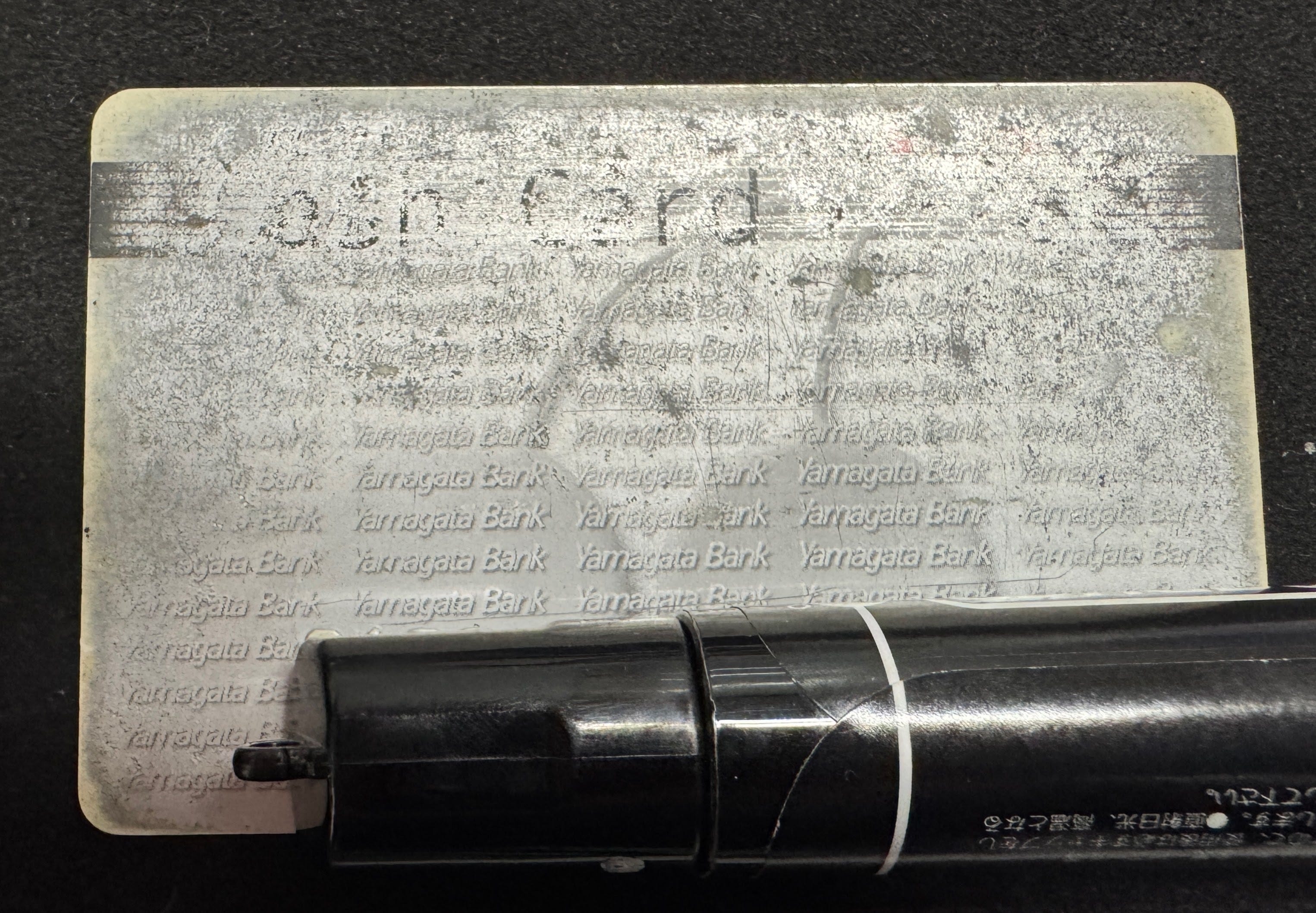
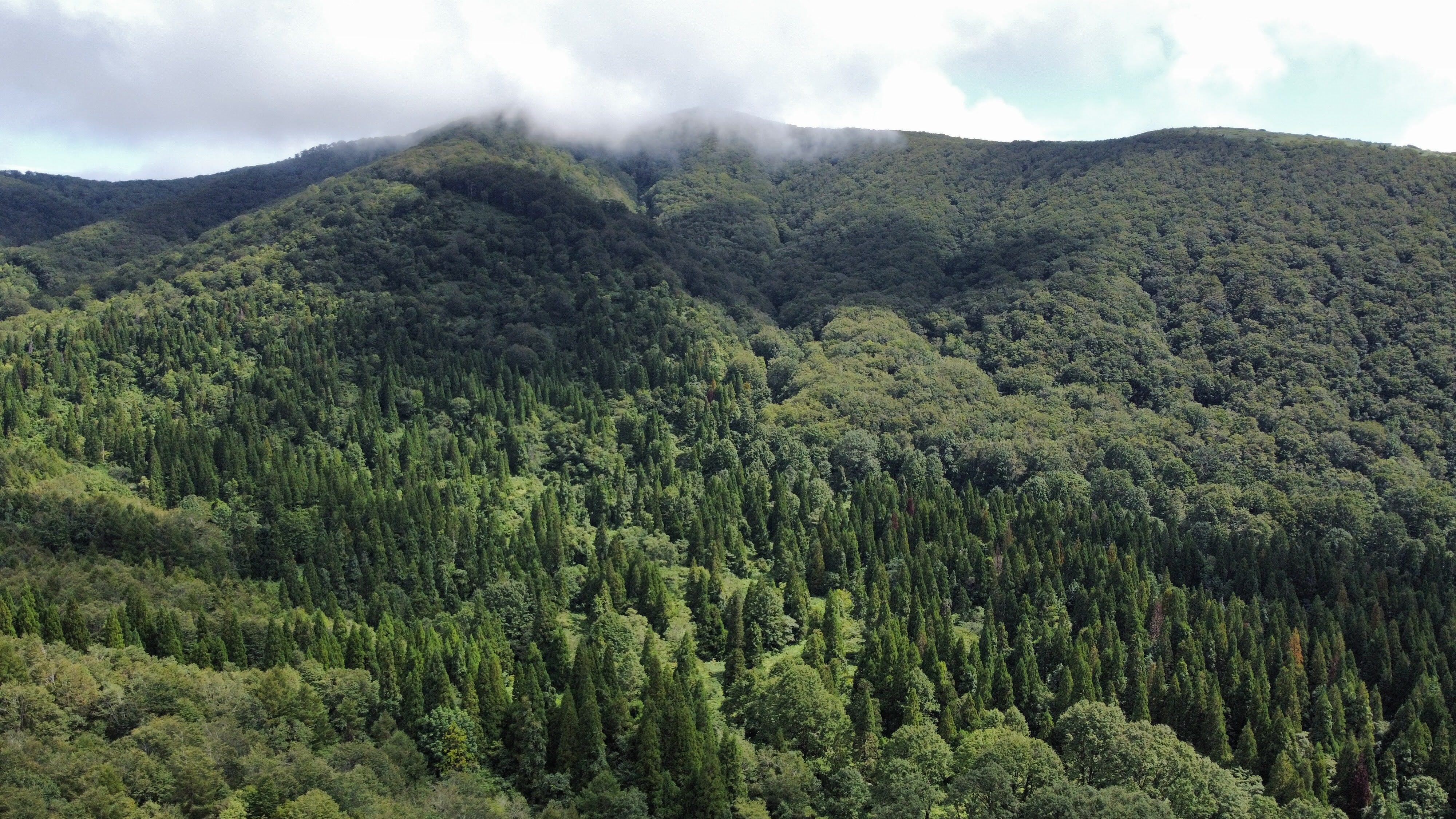
I ruffle through my pockets and pull my Yamagata Bank card out of my wallet, the very same card I was given all those years ago. The next second, the ATM pops open like a refrigerator door and reveals a long dark tunnel lit with lanterns. We follow the tunnel for a few minutes and come out at giant opening in the middle of a sprawling forest of tall, skinny trees. Right there in front of us lie giant torii gates adorned with the characters 通帳神社 ‘Tsucho Jinja’ (Passbook Shrine).
As is custom, we bow before entering the torii, and follow the steps up to the shrine building at the top. The bifold doors give a long, slow creak as we pull them out towards us and walk inside.
The walls are covered in books, but at the back there is a giant round mirror. Beneath the mirror an old man is crouched down behind a desk trying to find something.
“Sir?” The bank lady clears her throat and says softly. “Sir?” Louder this time.
The man’s green visor falls off as he spins around.
“Oh, sorry. I didn’t notice you. Please, have a seat.”
I take a seat on the tatami as instructed.
“Thank you for your dedication navigating the Japanese banking system over all these years. I am Tsucho-no-Mikoto, the Kami of Passbooks. You have proven your worth in appeasing me, and you shall be rewarded commensurate to your sacrifice.”
The old man leans back in his chair. Careful not to wrinkle his oversized suit, he reaches under his desk, picks something up, and places two items on top before he says:
“Congratulations. Now, which will it be?”
The Truth
The First Section: up to ‘Fast forward 16 years’
The handwriting part where I got it wrong three times and the lady had to get me new sheets is true. As is the part about my handwritten name on the passbook. Everything else in that section is basically a fabrication.
I ended up getting Internet Banking with Yamagata Bank in 2015. It was a huge hassle involving sending physical letters back and forth. Part of the reason of switching to NeoBank is to stop using this bank.
The Second Section: ‘Fast forward 16 years’ to ‘Enter Tsucho Jinja’
100% true!
The Third Section: ‘Enter Tsucho Jinja’ onwards
100% fake! I still haven’t gotten the phone call! I don’t know whether I can fix this problem or not!
Oh, the card still working part is true!
Daily Yamabushi Posts for July 10 to 16, 2026
Here are my Daily Yamabushi posts for the past week. Get more Daily Yamabushi posts at timbunting.com/daily-yamabushi. Discover more Japan essays and daily insights in the Kiwi Yamabushi Substack Archive, or follow my writing over on Medium.com.
What they actually used to be called
The half-width + middle-name combo is a classic final boss. I’ve started keeping one “canonical” katakana (and a no-space / no-middle variant) ready to paste — same string everywhere beats arguing with the form.
Woooh boy talk about synchronicity. Just last week I went through a very similar experience to your part 2. Let me quote from the Discord chat where I wrote it up to amuse others
I nearly broke my bank's IT systems. For reasons I needed to apply for a credit card using their web page. Also for reasons I had to use my full name with two middle names the entire time.
Which comes to 26 characters in Roman letters excluding spaces and not much less in Katakana (19?)
Turns out the web form only accepts 8-10 letters for the last name and only a few more for the first name because most Japanese names in kanji are 2 or 3 kanji for last name and 2 or 3 for first name and no one has a middle name.
I figured I could do this at the bank branch but no, even there I had to use the web form, but at least the bank branch could have someone call tech support and (eventually) get it escalated enough that we could figure out the work arounds and/or when we could ignore the extra letters.
On the plus side I know the card is going to be approved because among the people on the call was someone in the CC approval process who could tell us what bits to omit where and not to worry because she would be able to cross reference as required