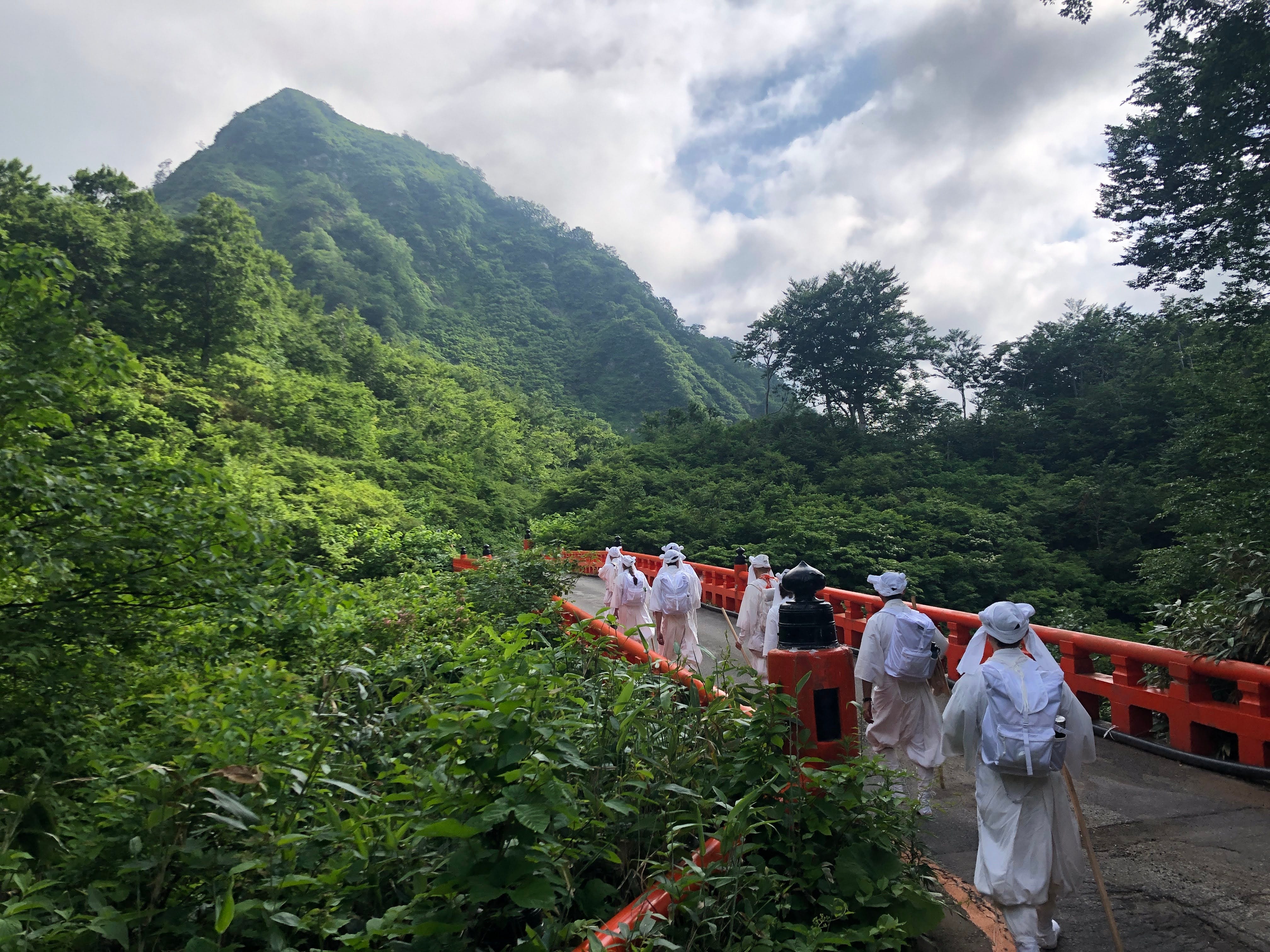
Uketamo Talks: A Conversation With Takeharu Kato of Yamabushido
And Daily Yamabushi posts from January 23 to February 5, 2026
I’m going to do something I never do, thanks to my fellow Yamabushi Master Takeharu Kato AKA Tak.
Tak convinced me to have a chat with him, about yamabushi life, what’s changed since becoming a yamabushi, what’s changed since becoming a yamabushi master, and my advice for those looking for advice from the mountains.
I’ll link to a video of the recording below, but for those who prefer things in written form, here’s a (slightly) abridged version:
In Conversation With Master Yamabushi Tak Kato
Tak: I would like to ask you about the change before and after you became Yamabushi.
Tim: I haven’t thought about this in advance, and that’s actually one change as well, not focusing too much on... like, focusing on trying to be in the moment. Which is something that Master Hoshino does; he always talks about being ‘live’, doing things ad lib. So my answer might be a bit… vague, but the first thing that comes to mind is the respect for my ancestors has changed completely.
I became interested in where I came from. My dad had done a whole lot of research into our genealogy, and I picked up on that. The culture of ancestor worship in Japan has changed over time, but I think Obon has a direct link to Yamabushi. For me, personally, it’s the biggest thing, (Mt.) Gassan, and what it represents, because it’s the world of the afterlife. It’s the world where our ancestors go as we pass away. By physically visiting Gassan, you get a sense for what life was like in ancient times…
If you’ve lost someone, it gives you the chance to reflect on that person’s impact on you. In my case, when I climb Gassan, it gives me a chance to think about my dad. And then, it also gives you a chance to think about not just your direct ancestors, but everyone that’s lived until now. Even people who you may not have a direct relationship with, they definitely have an impact on the world, and that impact on the world has an impact on you. You feel a connection to humanity; you feel a connection to life.
I never really felt a strong connection with other humans, besides my direct family, until I became Yamabushi, and especially on Gassan. Recently, I started to look at the connection to New Zealand. When you do your self-introduction in Maori, you say your mountain and your river, and that’s how you connect to the land. I only found out recently, my mountain is called Pukeatua. Puke means a hill, and Atua means kami, or god. The hill that I used to play on as a kid is literally the hill of the god. When we do Yamabushi training, I always recall back to when I was a kid playing out in nature in New Zealand on that same mountain.
Daily life stuff is because of Uketamo. If I have a spark, an inspiration to want to do something that could help people, I try and do it as soon as possible without letting my thinking mind interrupt my sensing mind. One example is when I have an idea to write an article; I make sure I put it down straight away. You just try to let your body lead—not letting your monkey brain stop you from doing things that could potentially be very helpful for other humans. It’s trying to trust your instinct and ignoring your thinking mind.
Tak: Can you let me know the most impressive participant or a transformational moment you’ve seen?
Tim: Anyone that has done it, I’ve felt a transformation in them. One person was unsure whether a non-Japanese person could be a Sendatsu (yamabushi master). By the end of the experience, they understood fully that because I have done the Yamabushi training, I can explain nuances that native Japanese speakers may not be able to explain.
Halfway through the training, they told me that they felt a very strong connection to the Earth in a moment we had on the mountains. That’s when I really felt it’s not me doing the work. Not really. We’re just leading people to the mountains and letting the mountains do the work. Letting the mountains do the magic. When you hear the stories at the Naorai, the after-training meal, it’s quite profound. We’re doing the exact same training, but the realisations people have are completely different, all for making better lives. I feel very proud that I’m able to provide that opportunity.
Tak: When you confront difficulties, how do the messages from the mountain help you deal with those challenges?
Tim: For example, going out in a storm on Gassan. The storm represents the troubles of life; life trying to get you down. But as a Yamabushi Sendatsu, we try to show people... we try to make people think that they can’t do something, but we show them that they can. When you say you can’t do something, you definitely can’t do it, but if you try, you sometimes find that you can. If you’ve been shown that you can do something you previously thought you could not, that gives you faith to move forward. If you can go out in a storm and pray, well, you can do anything.
Waterfall meditation is another example. The cold water represents the harsh reality of life. But if you remain calm, which you can do through controlling your breath or chanting the Heart Sutra, you keep yourself resilient. It’s a reminder to stay grounded and keep your footing.
Walking on snow is the same; it forces you to focus on being in that moment. Don’t worry about the step before, don’t worry about the step after—focus on the current step.
Tak: Would you illustrate the difference between a physical challenge and a mental challenge?
Tim: In modern life, we have it easy; it’s very comfortable, and it’s very easy to become complacent. Smartphones take you out of the moment. People are searching for a challenge because they know they aren’t living consciously. They want to prove who they are and to prove that they are alive. Yamabushi training shows we don’t need drugs or substances to remind ourselves of who we are. Nature has the key; nature has what we need, and we just have to allow nature to work its magic. Yamabushi have known that for centuries, and it’s our generation’s job to pass on this wisdom.
Tak: Please give a message to those who are thinking to join the program.
Tim: My first inclination is to not think about it and just do it. If you have even just a little bit of you that wants to do it, don’t let your thinking-mind cloud your judgment. It’s better to regret something you did than something you didn’t do. If your body is telling you to do it, just do it. You’ll find that mentally, you are already ready. Best thing to do is just do it without thinking too much about it.
Watch (listen to) the whole conversation
Meet Me on the Mountains
Join yamabushi training with Yamabushido. Tell them I sent you!
(Two Weeks of) Daily Yamabushi
Daily Yamabushi posts for the week of January 23 to February 5, 2026.
Read Daily Yamabushi at timbunting.com/blog. Most popular articles here.


Thank you for sharing this Tim. Your wise words were exactly what I needed to read this morning. I love that the hill you played on as a kid translates as 'the hill of the god.' It's like our path is always there for us, often much clearer that we realise, just waiting for us to actually see it.
Uketamo! Wonderful feature Tim. Please send on my best wishes to Tak-san and the Daishobo family 🙏