

Kia ora Koutou, Tim Bunting, Kiwi Yamabushi here on the Japan you never knew you wanted to know.
Spend even a tiny amount of time in Japan, and you may notice a strange yet comforting presence. And no, I’m not talking about the kami, nor our favourite fiend Fudomyo’o.
I’m talking about a presence often spotted along popular and not-so-popular roadsides alike. Oh, also in graveyards, for reasons that will soon become obvious.
Trademark red bib and cap, long shakujo staff, and massive bald head to boot (well, under the cap), it’s the one and only:
Jizo.
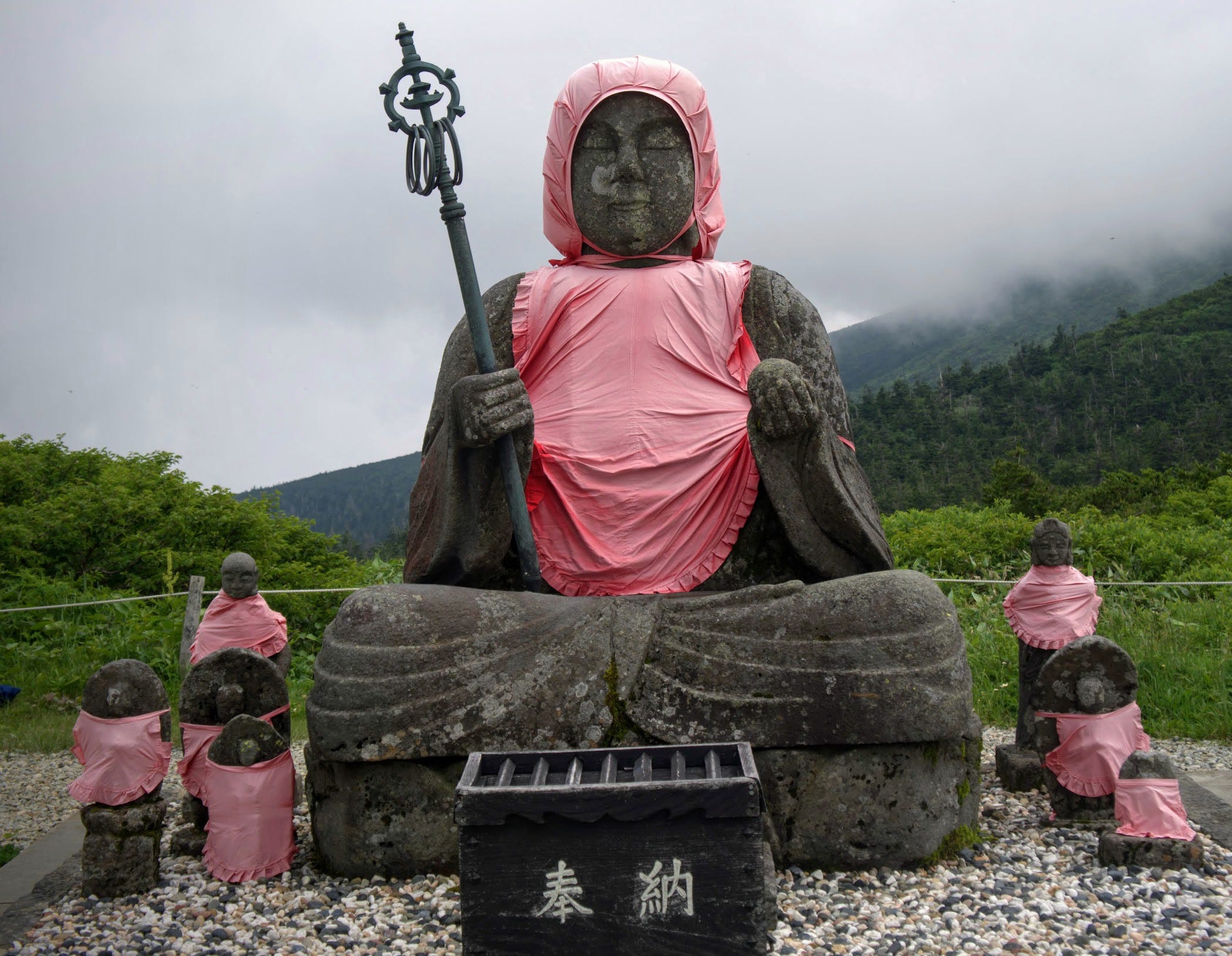
Jizo-san. Ojizo-sama.
Who is Jizo-san? Why do we see him everywhere in Japan? What’s up with those red bibs and caps?
Jizo-san is a Buddhist Bodhisattva called Kṣitigarbha (Kashi-ti-garbha) in Sanskrit. Japanese people primarily know him as the protector of travellers. But why?
Well, the answer lies within Jizo-san’s Shinto manifestation:
Dosojin.
Literally ‘road ancestor deity’, Dosojin are guardians of borders and paths often found in the form of stone statues and sometimes in small shrines called hokora.
No one knows exactly when or how Dosojin originated. What is known, however, is that after Buddhism’s arrival into Japan, our red-bibbed friend, Dosojin’s Honji Buddha, instead became the main guardian god of travellers and pilgrims.
So, what about Jizo-san makes him so special?
Jizo-san’s Great Vow
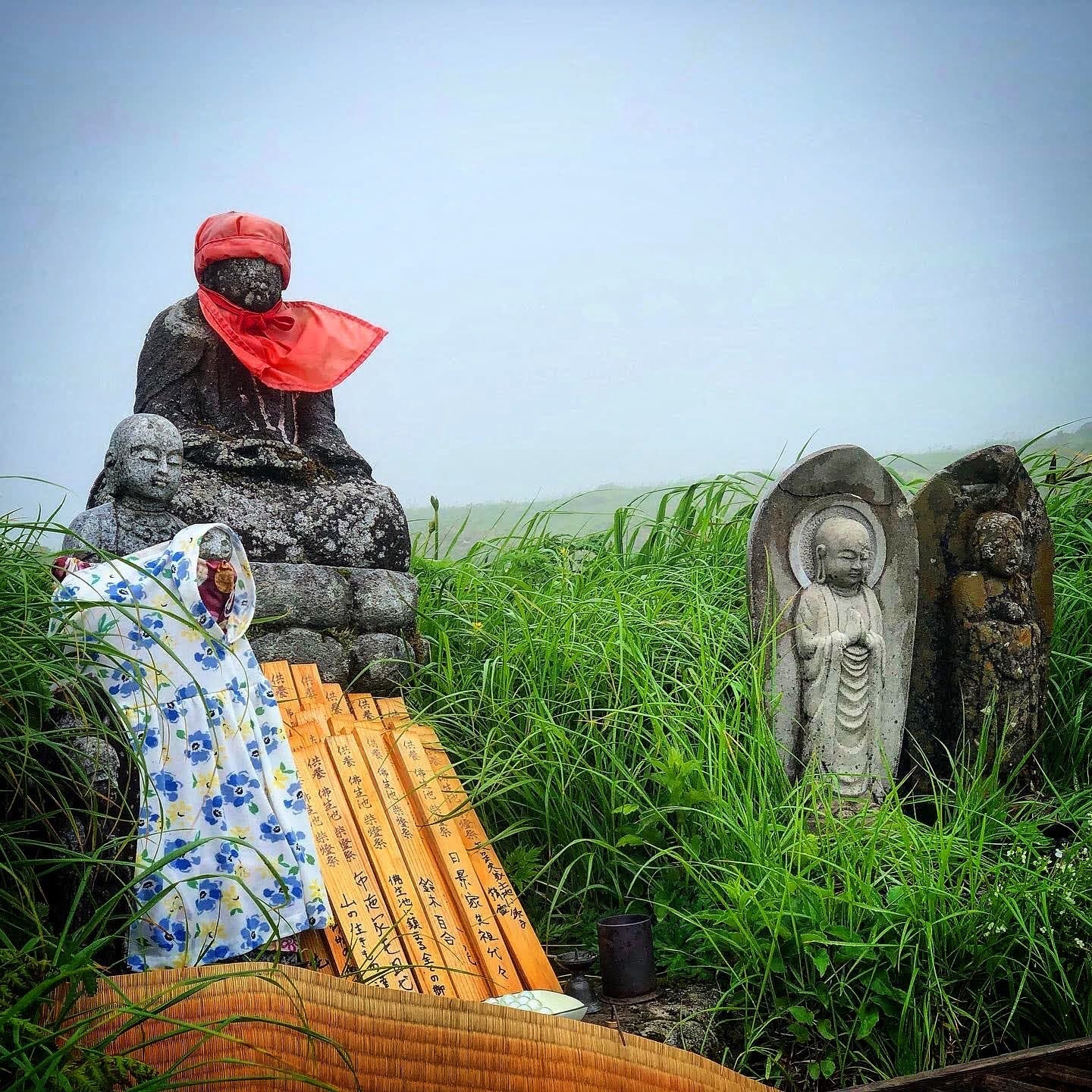
Jizo-san’s full name is Kṣitigarbha Bodhisattva of the Great Vow.
The Great Vow?
The Great Vow. Jizo-san’s Great Vow is to instruct all beings as they make their way through The Six Realms.
The Six Realms?
The Six Realms. Which of course are part of:
