
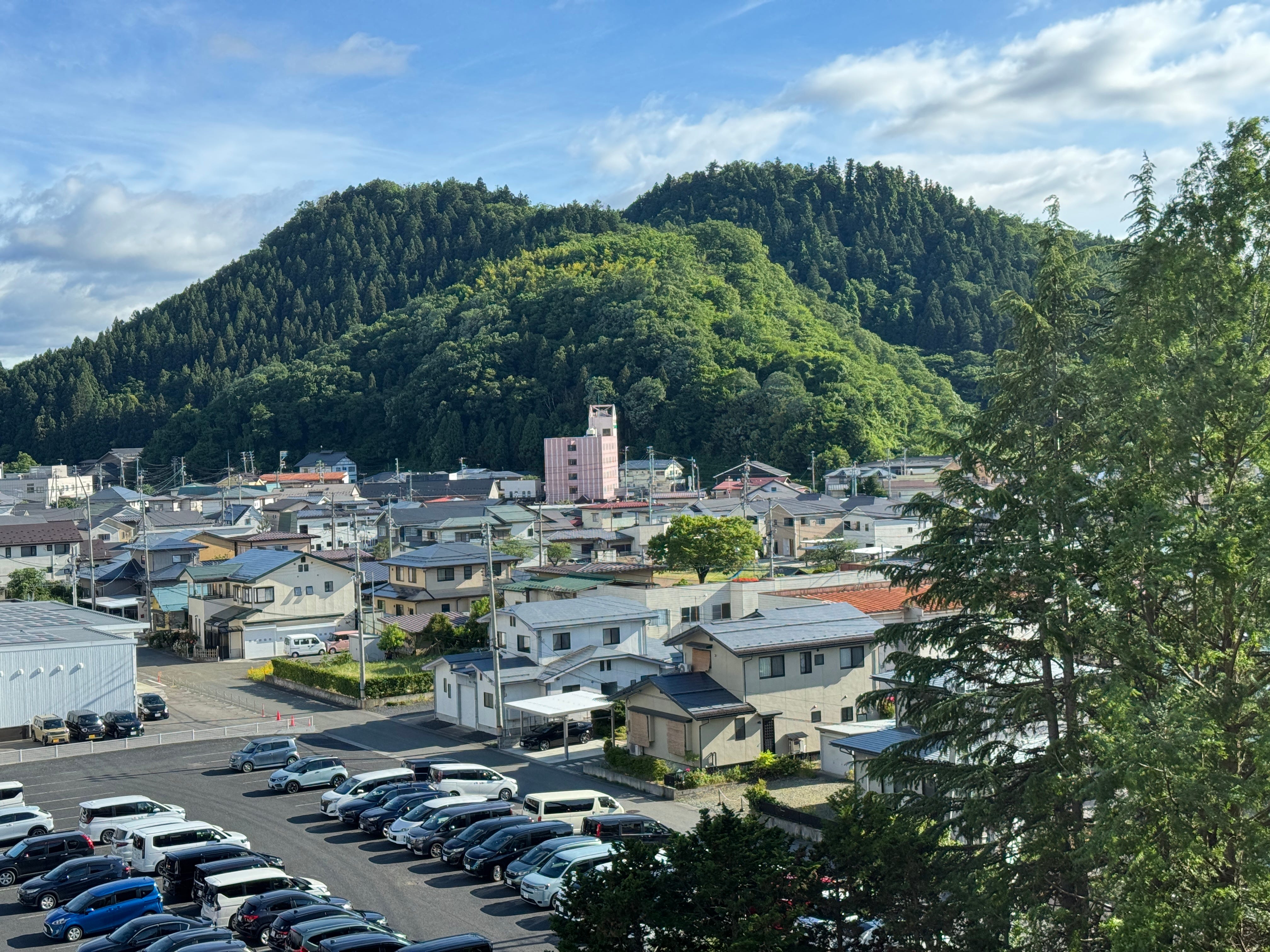
Last time we established that around the year 740AD a monk named Gyoki had an encounter with purple haze, and came up with the name for the mountain in the middle of Tendo, Tendo-zan: ‘Heavenly Children’. We also established that the townspeople got sick of the name Tendo-zan, and gave it another name: Maizuru-yama, ‘Dancing Crane’.
Is that all?
Far from it.
Except, there was a period when nothing noteworthy happened for like, oh, 600 years or so.
Wow. Much Peaceful.
Until it wasn’t.
The Nanboku-cho period, quite literally the Northern and Southern Courts period between 1336 and 1392, was the bloody and chaotic warm-up to the Sengoku Jidai, AKA The Warring States Period.
Why was it so bloody?
Well, because for these 60-odd years, Japan essentially had two emperors at the exact same time.
Two.
The Northern Court led and heavily backed by the military might of the Ashikaga Shogunate in Kyoto.
And, you guessed it, The Southern Court, rebel imperial loyalists led by Emperor Go-Daigo. Emperor Go-Daigo grabbed the sacred imperial treasures, fled to the southern Yoshino mountains, and declared themselves the only legitimate rulers. It wouldn’t be until the Meiji Period (1868-1912) that the legitimate emperor would take the power back.
But what does this have to do with Maizuru-yama?
Well, feeling the tide against them, the Southern Court sent an elite royal faction north to Ou, the current Tohoku region, to open up a brutal second front. Key amongst them was a young rogue prince called Kitabatake Akishige. In the mid-1350s, Kitabatake and his guerrilla fighters pushed deep into the Yamagata basin and came across Maizuru-yama (then known as Tendo-zan). He took one look at the mountain and thought:
Jackpot!
‘Screw the fact this mountain has been a spiritual stronghold for the better part of a millennium, these vertical slopes are such a tactical blessing it would be criminal not to take advantage of them.
And so Kitabatake did.
They quickly set up the first fortifications on Maizuru-yama, and with the support of the locals, and also the warrior monks of Yamadera, yes that Yamadera, defended it against the Northern Court.
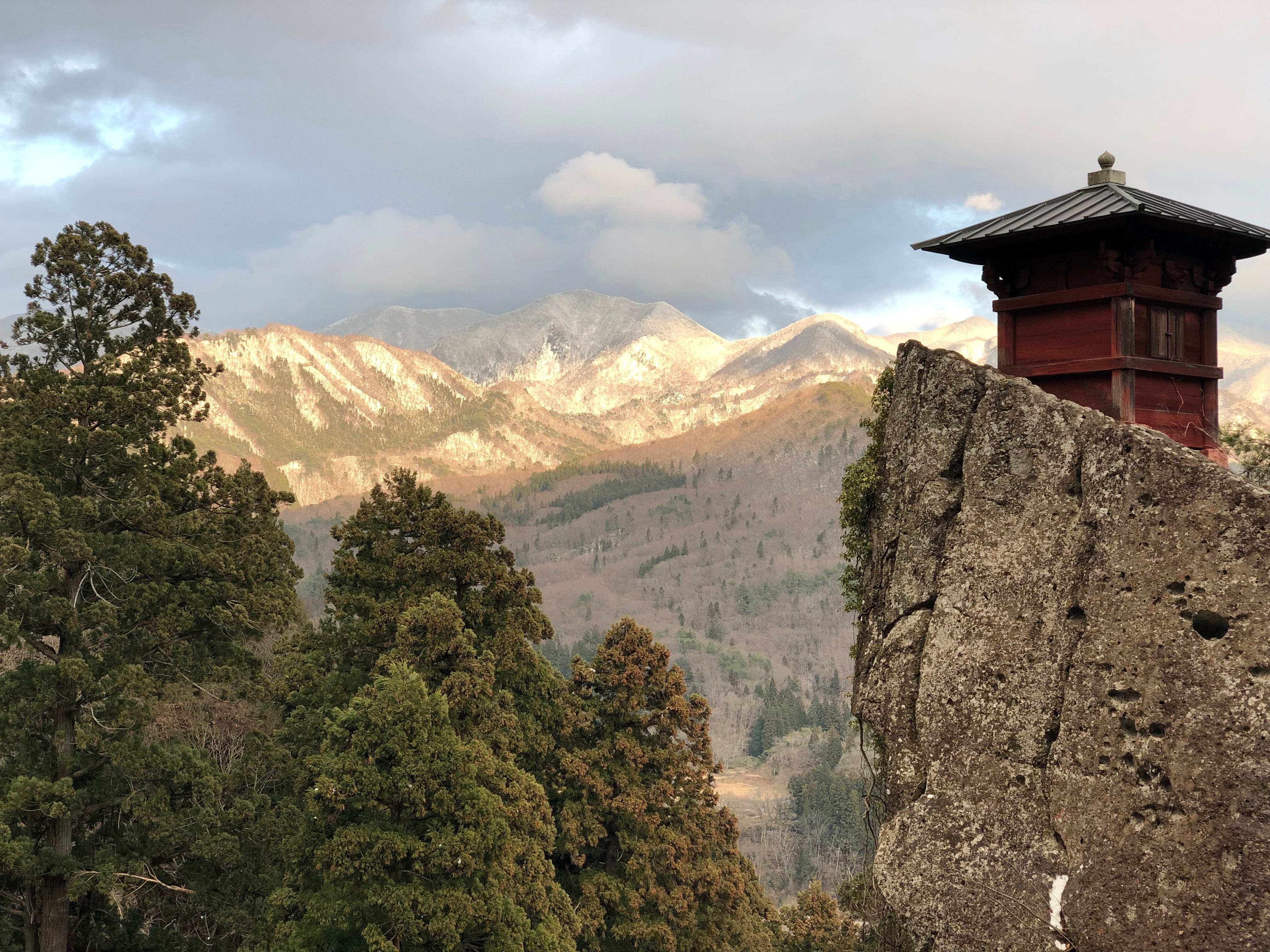
For the next twenty years!
In which time the locals affectionately gave Kitabatake the name “Tendo-Maru”, akin to ‘The Boy Prince of Tendo” (this is also where that suffix of -maru for ships in Japan comes from (not Tendo-Maru specifically)).
Twenty years is a long time to hold out, so you would assume The Northern Court were kind of useless?
I mean, they kind of were.
Even though at around the same time, they set up shop just south of Tendo in Yamagata City. Specifically, in 1356, a dude from The Shiba Clan (themselves a branch of the Ashikaga Clan), named Shiba Kaneyori, was sent into the Yamagata basin with the specific task of fighting against the Southern Court. Around 1360 Kaneyori set up base in Yamagata Castle, the castle that eventually became “The Castle of The Mist”, something I touch on here,
and also here:
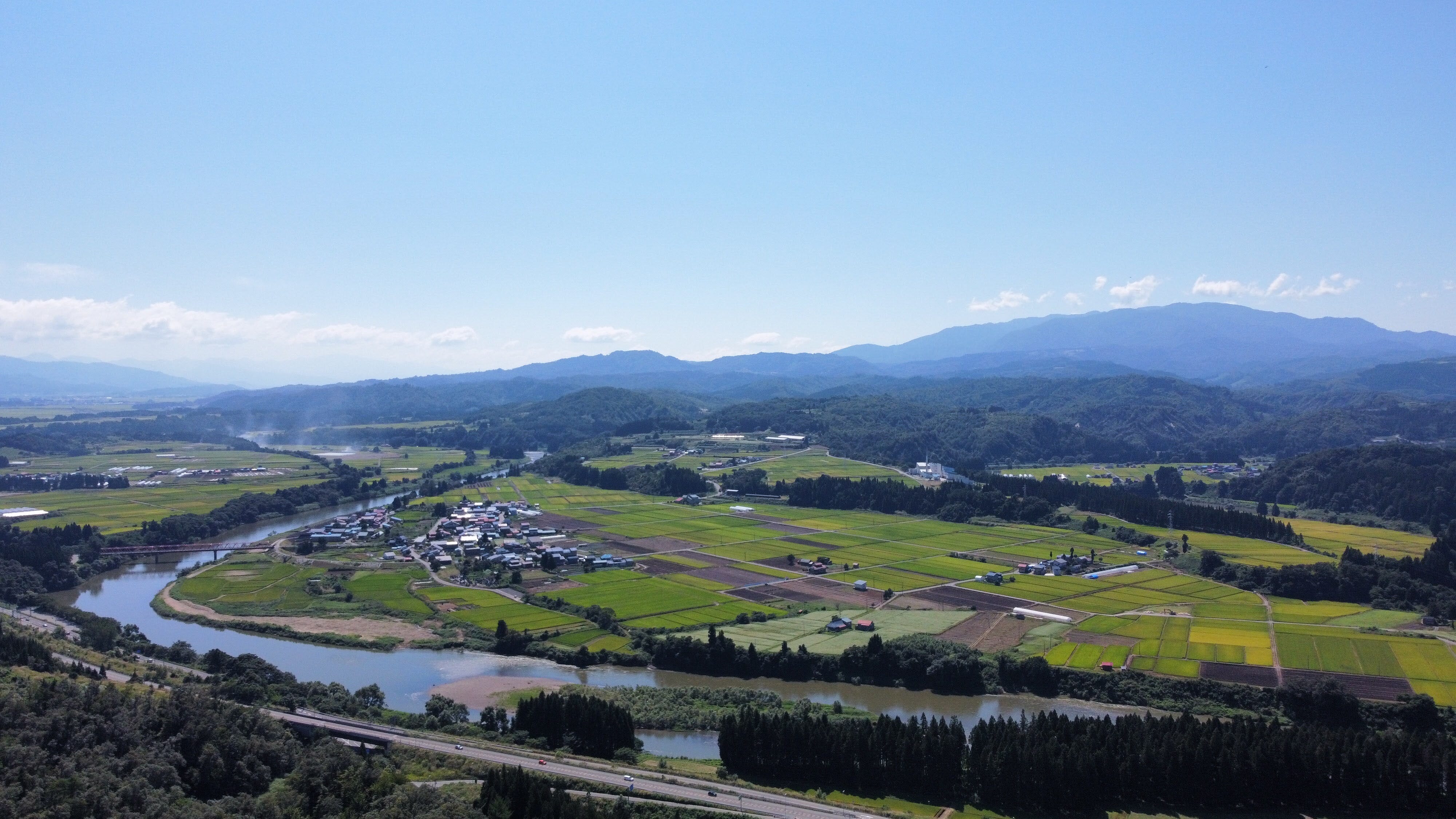
Now, if you’ve followed my work for a while, you undoubtedly have heard of the Mogami River. Basically, this river was the reason for the area that would become Yamagata Prefecture prospering during the Edo period specifically. Eventually becoming home to (by far the) richest family in all of Japan, The Honma Family, who literally live down the road from me in Sakata (seriously, I’ve met one of the descendants).
Anyway, for the longest time I thought that the Mogami River was named after this Mogami Clan.
It turns out I could not have been more wrong!
It turns out it was the exact opposite.
Around the time Shiba Kaneyori and co. set up shop in Yamagata Castle, they also took on the name of the river and became the Mogami Clan.
Because why wouldn’t you?
I mean, the characters for Mogami, 最上, quite literally mean ‘The Most Superior’.
You quite literally cannot get any better.
Except, they couldn’t quite get the better of Tendo-maru.
At first, at least.
Enter Shiba Kaneyori’s grandson Mogami Yorinao. Who was born a Shiba. But at this exact time was actually named Satomi Yorinao. In 1356, Yorinao was sent to be adopted into the childless Satomi Clan in the northern flatlands of the Yamagata basin, just to the northwest of Maizuru-yama.
For the next twenty-odd years, Yorinao lived in a lowland manor house called Naryu-Tate, from where he called the shots under the Satomi banner. (Naryu-Tate was located here, and is currently a tiny rural Shinto shrine called Ryūzu Gongen / O-Kokuzō Shrine (大虚空蔵神社 / 龍頭権現)).
Now, Yorinao was no idiot. And was actually quite the strategist. There were three main stages in his takeover of Maizuru-yama:
Convincing the locals to become loyal to him instead
Using his power at the helm of the Satomi Clan, the clan that held the land around Maizuru-yama, Yorinao used local diplomacy and tax incentives to sway the peasantry to his side. He made it clear that backing a dying Southern Court cause meant perpetual war, while backing his new Northern-supported administration meant peace and stability.
And, basically overnight, Tendo-maru’s intelligence network and food supplies dried up.
Stopping the Spiritual Pipeline
Besides the peasantry, Tendo-maru was receiving assistance from the warrior monks of nearby Yamadera, who were themselves stern supporters of the Southern Court. They also had immense wealth, knew many secret mountain trails, and had massive stockpiles of supplies. Shiba Kaneyori and his grandson Yorinao set up patrols around Maizuru-yama to stop these monks moving grain, weapons, or medicine into the mountain fortress.
A strategy that worked really well!
The Cold Realisation and Midnight Flight
When winter came around, sometime in the mid-1370s (with records saying sometime between 1372 and 1374), Tendo-maru’s forces were depleted, starving, and entirely cut off from the world.
Yorinao purposely left the northern mountain passes slightly open for Tendo-maru to escape. If he didn’t, what with being a Samurai and everything, Tendo-maru would have fought to the bitter end and taken half of Yorinao’s army with him. Give a samurai an open back door, and they will choose survival.
Give them no choice, and they will take half your men with them to hell.
Anyway, Tendo-Maru saw the writing on the wall, and under the cover of darkness took his remaining loyalists up north to Aomori, where his aristocratic bloodline survived…
Wow. Such Peaceful.
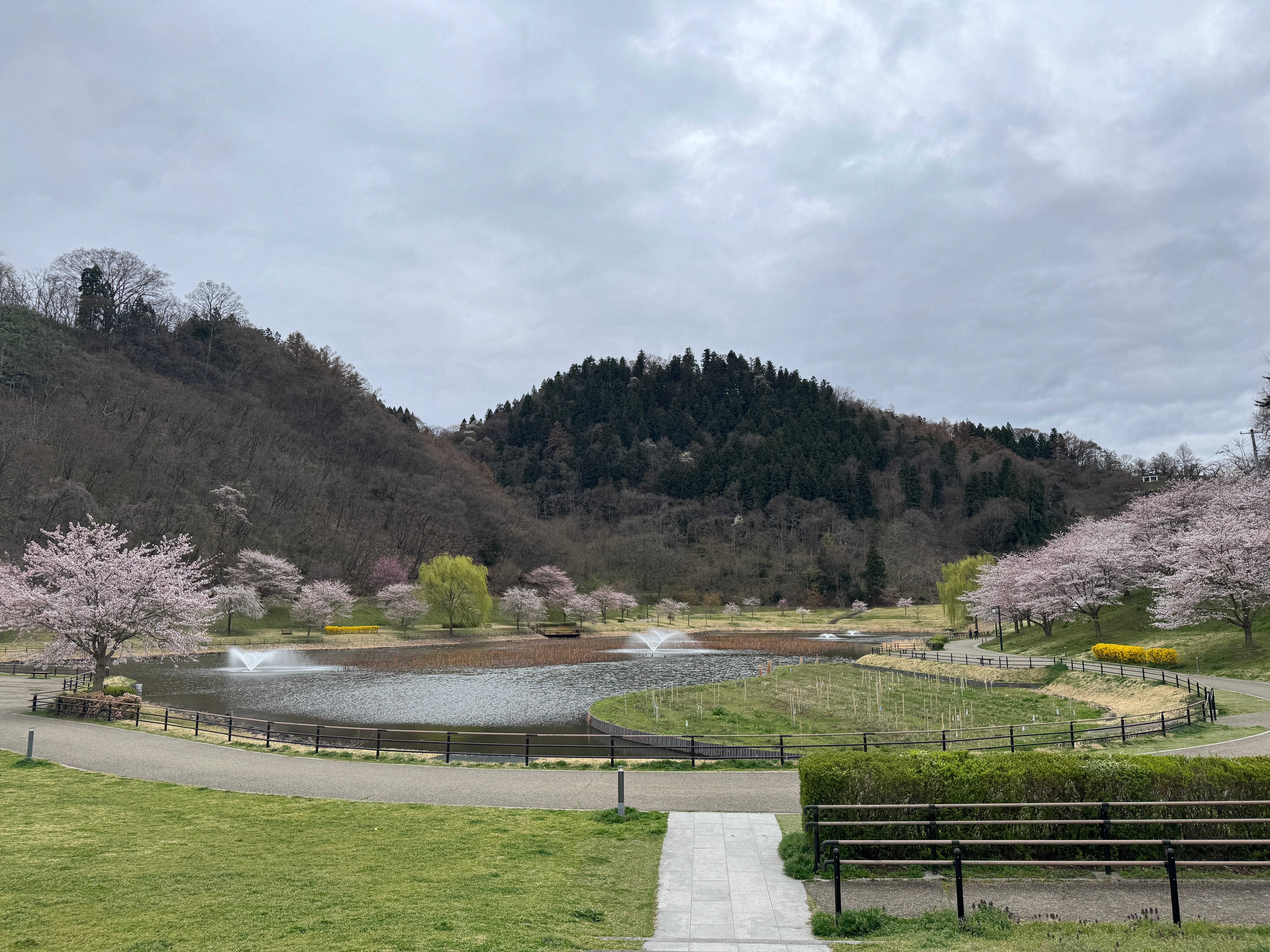
So, in 1375, Mogami Yorinao took Maizuru-yama as his own, and promptly built on what Tendo-maru had done to turn the mountain into a mountain castle.
Just in case.
What with the coming Sengoku Jidai and all that…
Luckily, Maizuru-yama is what you would call ‘perfect yamajiro mountain castle material’. The mountain is in the peculiar shape of a giant ‘C’. Plus, there are three distinct peaks: the central, eastern, and western.
Yorinao would be like:
‘If one were to fall, we could just move our army to the next, and we’d still be able to shoot the enemy from above.’
And then there are the ridges of Maizuru-yama, the ones covered in purple haze from last time. Well, these ridges were prime for carving using hand tools in a technique called Kirigishi (literally ‘cutting cliffs’) to create vertical drops enemies cannot climb.
Lastly, the mountain could also be dug to form moats using a technique called Horikiri (literally ‘moat cutting’) to create paths that lead to bottlenecks where enemies could be easily ambushed from above.
And so they went ahead and did all that.
In the meantime, to lock down his victory and prove loyalty to the locals, Yorinao dropped the Shiba, Satomi, and Mogami ties all at once. Then, he took on the name of the town that had already taken on the (original) name of the mountain. In doing so, Yorinao entered his final form: Tendo Yorinao.
And then they stood in their castle waiting for enemy forces to attack. And waited.
And waited.
Until absolutely nothing happened.
And just how long did the just-in-case castle have to wait to see some action?
202 years!
But that’s a story for next time.
Daily Yamabushi Posts for June 12 to 18, 2026
Here are my Daily Yamabushi posts for the past week. Get more Daily Yamabushi posts at timbunting.com/daily-yamabushi. Discover more Japan essays and daily insights in the Kiwi Yamabushi Substack Archive, or follow my writing over on Medium.com.